

A December hearing date has been set for the first religion-related case that will be heard by the U.S. Supreme Court during its term that begins Oct. 5.
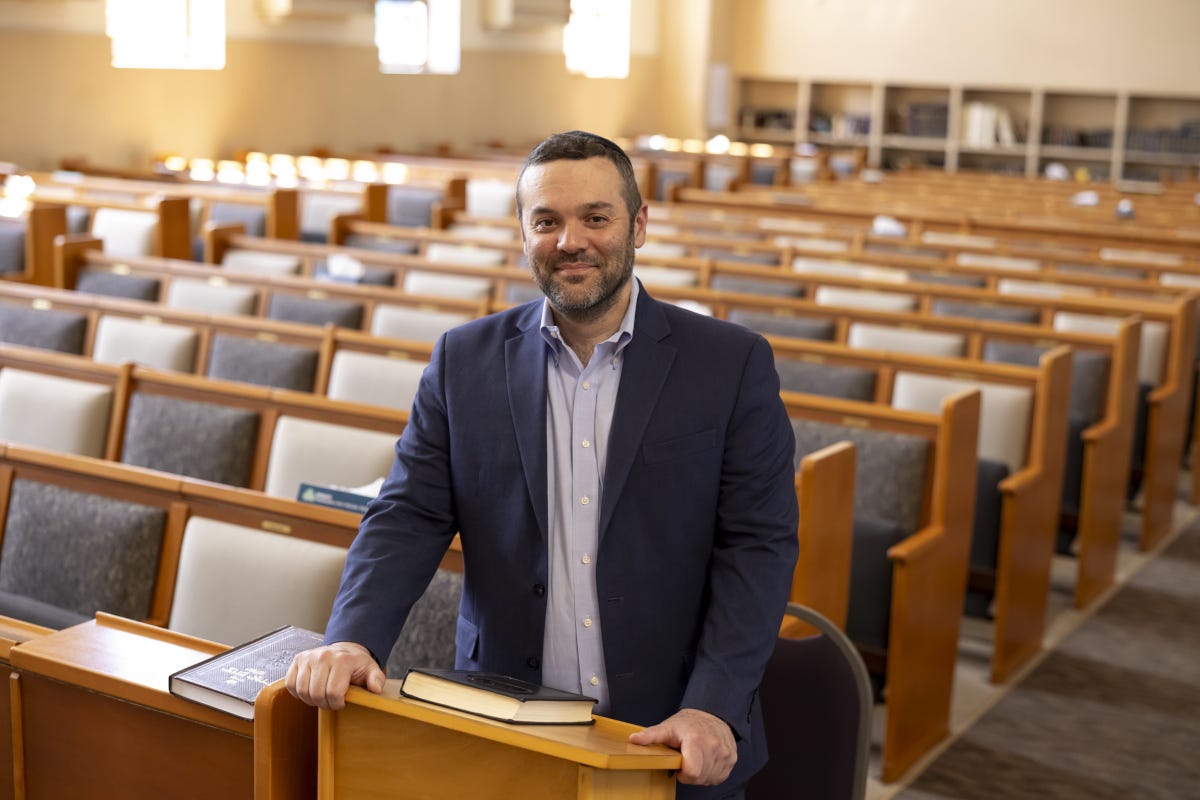
The court has announced that a Dec. 9 hearing will be held in the case of Daniel Grand, an Orthodox Jew living in University Heights, Ohio, who claims that he has been harassed by city officials responding to his attempts to organize regular small meetings of other Jewish men in his home.
Grand has gained support from various Christian churches and organizations that point to a long tradition within Christianity for home worship, and they also cite traditions in other religions.
The case is Grand v. City of University Heights. It is one of two-religion cases already on the agenda for the court’s 2026-27 term; the other is St. Mary Catholic Parish v. Roy, in which a Catholic preschool is trying to get admitted to Colorado’s state-funded universal preschool program. No date as been set for a hearing in that case. There are also several other religion-related cases, including challenges to laws requiring the posting of the Ten Commandments in public schools, that could end up the agenda for the coming year.
According to Grand’s account, he emailed a dozen male friends in January 2021 asking them to join him in prayer as a minyan, a group of at least 10 Jewish men, on a Saturday. Before the minyan could convene, however, city officials got wind of the planned meeting and sent a cease-and-desist letter telling him he couldn’t use his home in a residential zone as a place of religious assembly. Grand decided to apply for a special-use permit and now claims that he faced “unprecedented procedural burdens” causing him to withdraw his permit application.
Technically, the legal dispute is over whether the city’s actions have had enough finality for Grand to be able to sue under the First Amendment and the federal Religious Land Use and Institutionalized Persons Act; the city claims that without any enforcement action against him since he first sought a permit, Grant has not been legally harmed.
Since the high court agreed to consider the case, Grand has received “friend of the court” briefs of support from the NC Values Institute and the Pacific Legal Foundation, both of which focus largely on technical issues involving land-use law. He has also received the support of a small group of religious organizations that point to some of the religious issues involved in the case.
The groups that filed that latter brief include The Church of Jesus Christ of Latter-day Saints, the Lutheran Church (Missouri Synod), the National Association of Evangelicals and the Seventh-day Adventist Church, all of which have traditionally been actively involved in promoting religious liberty. The Jewish Coalition for Religious Liberty and the Anglican Reformed Catholic Church also joined in filing that brief.
The brief cited non-Jewish religious traditions involving home religious gatherings:
🟪 Christians were holding home gatherings as early as the New Testament times.
🟪 The LDS church encourages members to study scripture ‘with your family, or with friends.’”
🟪 “Southern Baptists routinely open their homes for Bible studies and small groups, prayer meetings, church planting, youth gatherings, discipleship groups, missionary gatherings, hymn singing and worship, and the potluck meals and fellowship that have long been a hallmark of Baptist community.”
🟪 Various “large Protestant congregations also encourage believers to meet as small groups in private homes for prayer and Bible study.”
🟪 Millions of Americans participate in a “house church” movement that eschews dedicated worship spaces and formal church organizations.
🟪 Some of the most important Muslim rituals take place in homes, especially during Ramadan.
🟪 The vast majority of American Hindus “say they use an altar, shrine, or religious symbol for worship in their home.”
🟪 Some religious minorities, such as Baha’is and Sikhs, worship in their homes because they are too small to have dedicated facilities.
The city has until mid-October to file its formal arguments. Third parties supporting the city have yet to file friend-of-the-court briefs.