The sacrilege continues as Christian leaders stay mum about White House depravity
‘We need more of this,’ says Metaxas after president’s Easter morning rant

Nothing says more about the moral collapse of Christianity in the United States than the recent lack of public reaction — and even occasional praise — as President Donald Trump and his inner circle applaud the morally reprehensible and engage in blasphemy, all in the name of Christ.
To be fair, we’re not talking about all of Christianity here. Catholic bishops, following the lead of the American Pope Leo, have consistently placed themselves at odds with Trump on issues such as immigration and the war against Iran. So have the most prominent voices of mainline Protestantism. Even the National Association of Evangelicals has consistently challenged aspects of Trumpism, such as by advocating for immigrants.
But none of those, with the exception of the pope, are widely known as Christian leaders.
For many Americans these days, it is not the voices of reason that are linked to the word “Christian.” It is the loud voices of the MAGA wing of Christian nationalism.
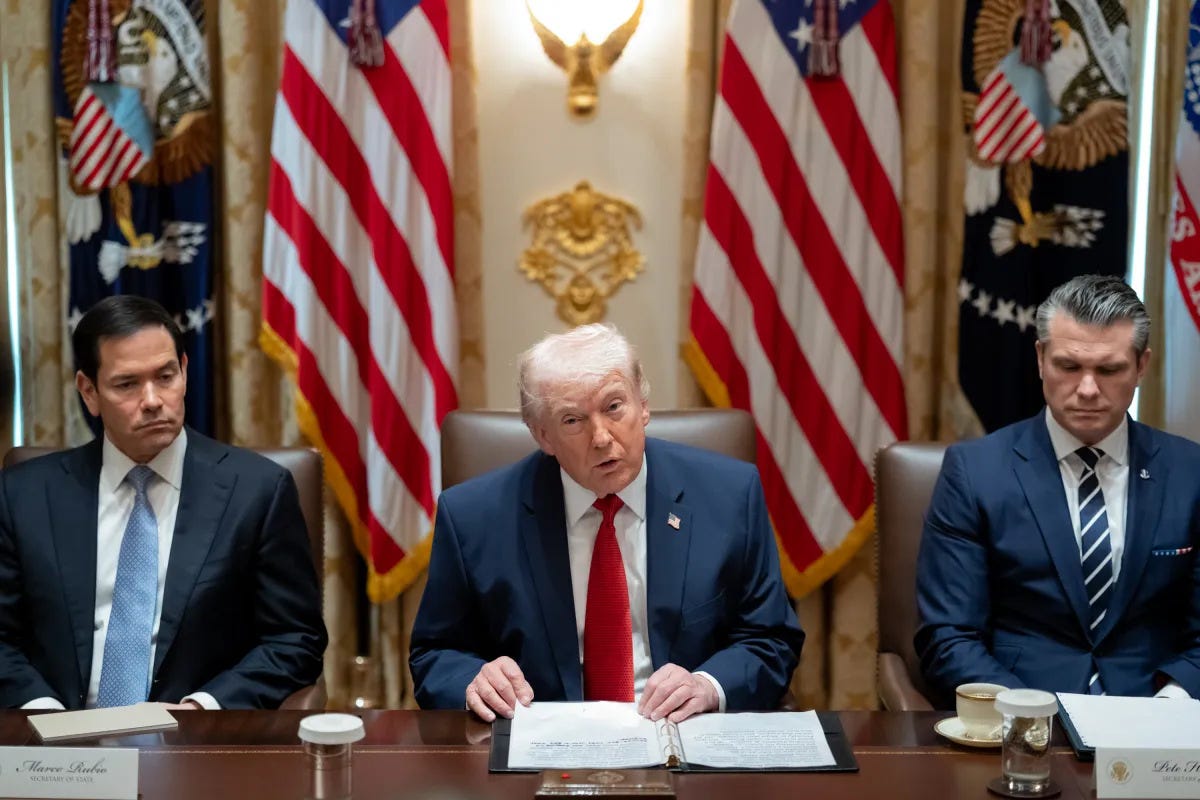
And they seem to be indifferent at best as Trump and his secretary of Defense, Pete Hegseth, take the name of the Lord in vain by proclaiming divine support for their policies:
Trump was asked by a reporter during a press conference yesterday if God supports his policies on Iran, policies that include war crimes. “I do,” said Trump when asked the question, “because God is good.”
Pete Hegseth, the secretary of Defense, who has pictured the United States as a Christian force against the evils of Islam, has said much the same thing. Yesterday, he even compared the rescue of a U.S. pilot over the weekend with the Resurrection of Jesus. “Flown out of Iran as the sun was rising on Easter Sunday, a pilot reborn,” he said.
The response of silence from MAGA-supporting Christian leaders to Trump’s vulgar social media post on Easter morning — the one in which he used the f-word, threatened to commit war crimes and ended with “Praise be to Allah” — has been telling.
One of the very few who has publicly said anything is Franklin Graham, the son of the late evangelist Billy Graham and the closest thing we have to an unofficial spokesperson for American evangelism. But Graham, who in normal times posts frequently on social media, commented only because he was queried by his local newspaper, and then he declined to criticize Trump. His most harsh comment was that Trump “sometimes chooses words to express himself that I do not agree with.” Then Graham defended the policies of a president who today threatened genocide, saying that Trump is “trying to protect the world from a very serious nuclear threat and give the people of Iran a chance at freedom.”
It’s hard to see how Iranians could be free if Trump were to carry out his threat that a “civilization will die tonight” if the Iranian leaders don’t succumb to his demands later today.
As morally lacking as Graham’s comments were, the words of evangelical political thinker Eric Mataxas, as quoted by the Christian Post, were worse: “We need more of this, not less” he said.
And then there was Christian apologist Dinesh D'Souza, who favorably compared Trump to the Old Testament prophet Elijah.
And after that, comments from the most consistently outspoken evangelical leaders are nowhere to be found. If they’re bothered by the sacrilege of linking the Prince of Peace to a potentially genocidal military action, they don’t appear to care to let anyone know.

