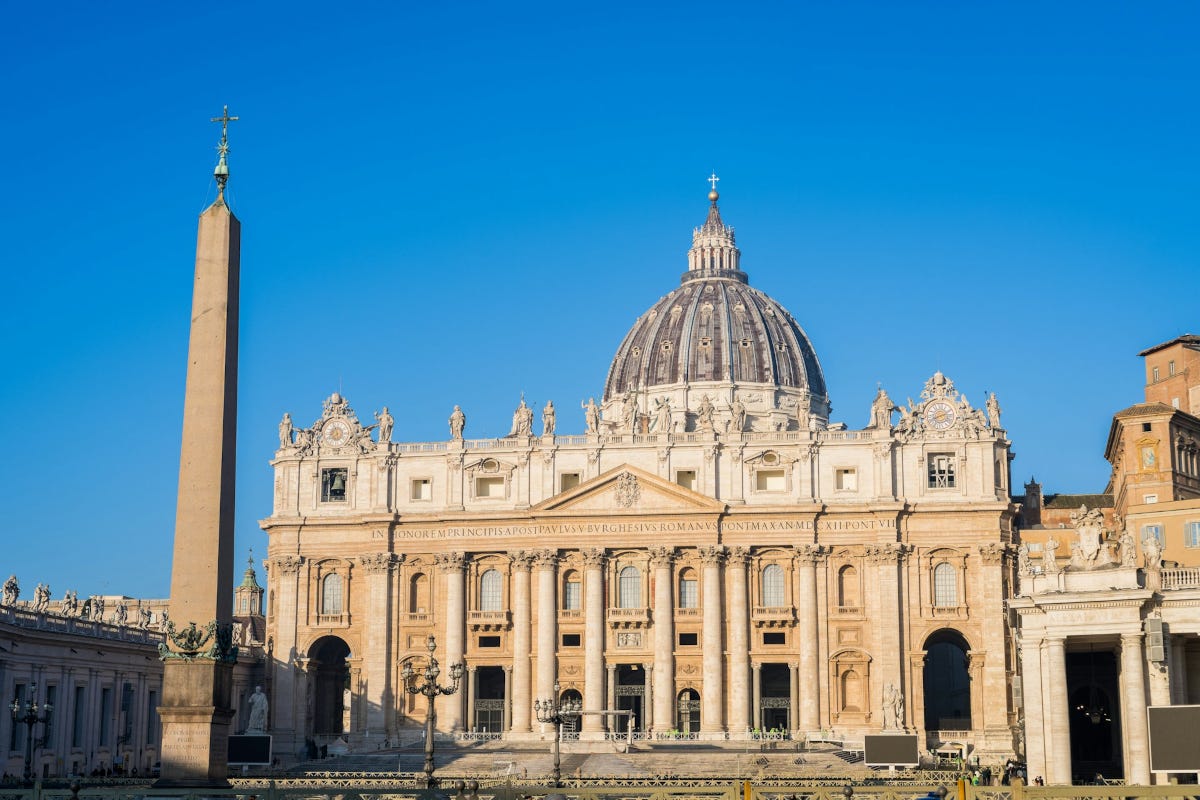
Supreme Court turns aside effort by Catholic bishops to terminate lawsuit by donor
Plaintiff claims he was misled over how donations to charitable fund would be spent

At least for the time being, the U.S. Supreme Court isn’t going to get involved in a class action lawsuit involving allegations that the Catholic Church did not spend money donated to an annual collection known as Peter’s Pence in the way promised.
The high court said in an unsigned brief order yesterday that it would not hear an appeal from the U.S. Court of Appeals for the District of Columbia in United States Conference of Catholic Bishops v. O’Connell. The appeals court had agreed with a trial judge court that the plaintiff, David O’Connell, could use the discovery process to seek information about how the church used money donated to the fund and how it conveyed information about it to parishioners nationwide. The USCBB appealed to the Supreme Court, arguing, among other things, that a legal principle known as the church autonomy doctrine prevents such an inquiry.
To hear an appeal, four Supreme Court justices must agree to take the case; there was no indication in the order to indicate whether any of them did. Justice Ketanji Brown Jackson did not participate in deliberations due to unstated circumstances that might call her neutrality into question.
A decision by the Supreme Court to not hear a dispute has no value as precedent, and the ruling does not necessarily indicate disagreement with the Catholic Church’s position. It also does not preclude further litigation of legal questions that could be raised as the case proceeds.
The Catholic Church had received the legal support of a wide variety of churches and other religious organizations who wanted the top court to dismiss O’Connell’s lawsuit. They generally claimed that court inquiries as to how a church manages or talks about its funds can get courts entangled in internal church decisions in a way that would violate churches’ First Amendment rights to freedom of religion.
O’Connell, a Catholic parishioner from Rhode Island, had filed his lawsuit in 2020, claiming that had been misled in church about how donations to Peter’s Pence would be used. In seeking dismissal of the suit, the bishops’ organization had taken the position that courts do not have the constitutional ability to second-guess churches about how they spend their money. But in disagreeing with the church, the trial and appeals courts had said that the lawsuit could proceed as long as the church was treated the same as secular organizations without the discovery process intruding into matters of church doctrine or religious practice.
The appeals courts had said that “district courts have ample tools at their disposal to limit discovery, tailor jury instructions, and dismiss claims as necessary to safeguard against infringements of the church autonomy doctrine.”
Yesterday’s ruling means that O’Connell’s lawsuit can proceed under terms set by the trial court.

