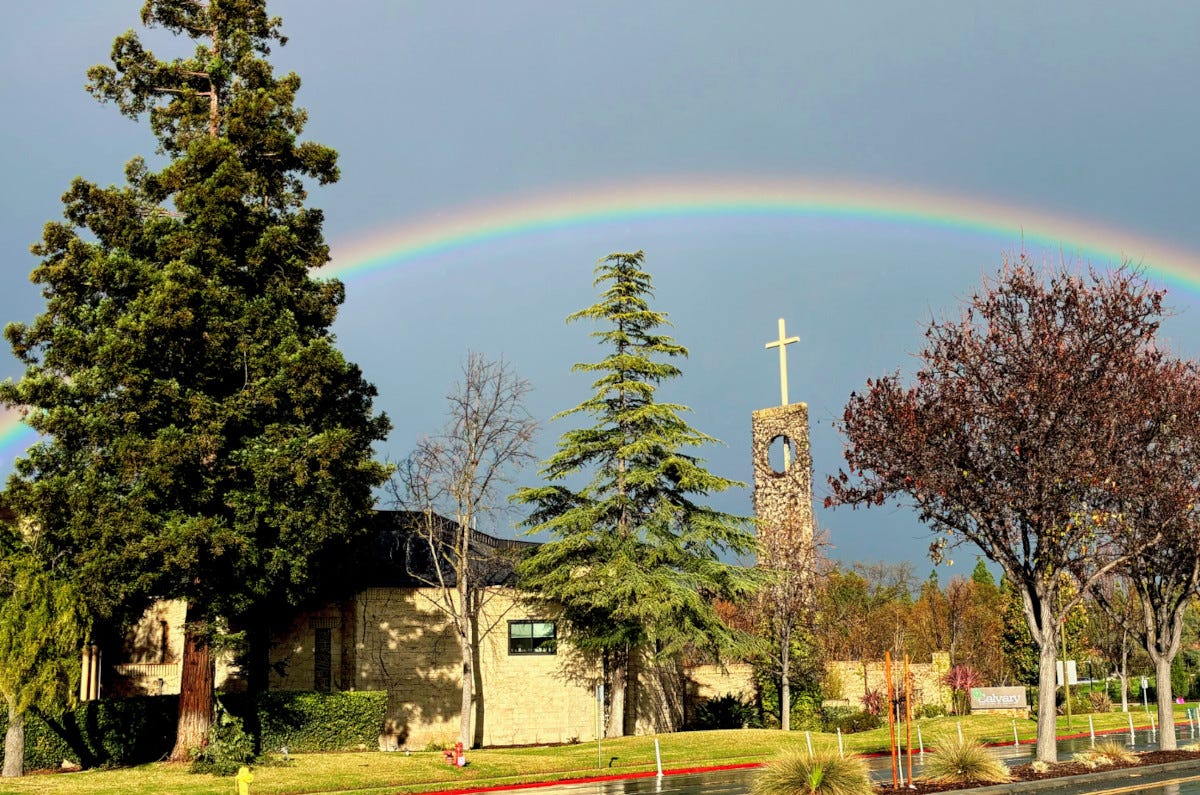
Calvary Chapel church and its pastor appeal $1.2 million covid-related fine to Supreme Court
Among their arguments is that such a large penalty violates Eighth Amendment
The covid-19 epidemic is over, but legal wrangling over whether state and local governments had the power to force worshipers to comply with covid protocols is not. Case in point: California’s Calvary Church San Jose is continuing to contest over $1 million in fines that were imposed on the church for its refusal to comply with various covid restrictions in 2020, petitioning the U.S. Supreme Court to reverse the fines and to declare that the state of California and Santa Clara County acted unconstitutionally.
The case of Calvary Chapel San Jose v. California has a convoluted history, but the bottom line is that Calvary Chapel’s legal fight has resulted so far in some $2.8 million in fines being reduced to $1,228,700, and the church wants to bring that number to $0. Plaintiffs Calvary Chapel and its lead pastor, Mike McClure, claim that the fines run contrary to the landmark 1989 Supreme Court ruling of Employment Division v. Smith as well as the “excessive fines” provision of the Eighth Amendment.
Calvary Chapel filed its petition to the high court in mid-December, and the court has given the state and local governments until Feb. 17 to make their written arguments for the court to reject the appeal, which would have the result of allowing the fines to be imposed.
The church is represented by the America Center for Law and Justice, one of the country’s best-known law organizations supporting conservative political and religious causes, as well as Advocates for Faith and Freedom, a nonprofit California law firm.
The lawsuit raises four legal issues:
🟪 The main holding of Employment Division v. Smith was that the government could impose restrictions on religious practices through laws that were “generally applicable” to religious and secular practices alike. Calvary Chapel is claiming that the California covid protocols, as enforced, had so many secular exceptions that they were no longer generally applicable. In other words, the church claims it was treated differently than secular organizations that created similar covid risks.
🟪 The Supreme Court has generally followed what is known as the religious autonomy doctrine, which prevents the government from not interfering with the ability of churches to select their ministers. Calvary Chapel is asking that the doctrine should be extended to prevent the government from interfering with liturgical decisions, which is says were affected by the health protocols.
🟪 Whether Employment Division v. Smith itself should be overturned.
🟪 Whether the Eighth Amendment prevents the size of fines that were imposed on Calvary Chapel.
The ACLJ tends to couch its positions intense language, and it is making so exception in this case. In a statement on its website, the ACLJ says:
This case is about far more than one church in California. It’s about whether government officials can claim authority to referee worship – dictating whether congregants may sing, how far apart they must stand, or whether a pastor may lead communion. Those powers are incompatible with the First Amendment and with the very idea of religious liberty in America.
As our petition explains, government micromanagement of worship services “is something one would expect from the Soviet Union or Communist China,” not from a constitutional republic founded on freedom of conscience.
When California and Santa Clara County respond to the petition, they are likely to echo some of the words of the Evette Pennypacker, a judge of the Santa Clara County Superior Court who upheld the fines in 2023 and wrote:
“It should appear clear to all — regardless of religious affiliation — that wearing a mask while worshiping one’s god and communing with other congregants is a simple, unobtrusive, giving way to protect others while still exercising your right to religious freedom. Unfortunately, Defendants repeatedly refused to model, much less, enforce this gesture. Instead, they repeatedly flouted their refusal to comply with the Public Health Orders and urged others to do so ‘who cares what the cost,’ including death.
If the Supreme Court agrees to hear the case, it most likely would not make its final ruling until 2027.


