

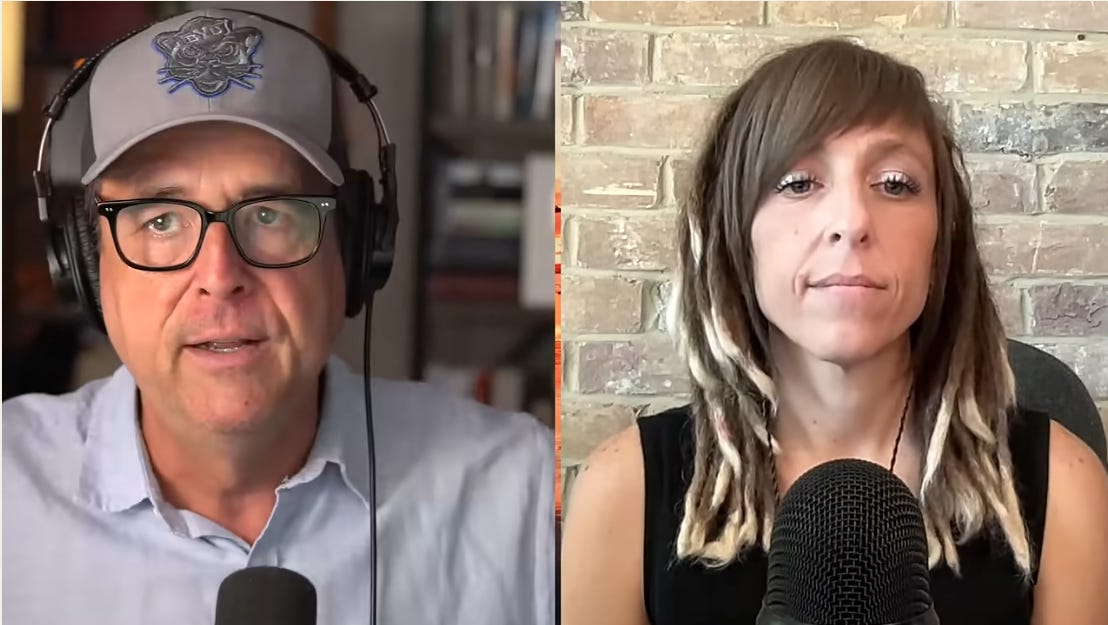
The American Civil Liberties Union and a leading advocate for Internet freedom of speech, the Electronic Frontier Foundation, are helping one of the best-known critics of The Church of Jesus Christ of Latter-day Saints fight the church in a trademark infringement lawsuit it has filed against him.
The ACLU and the EFF filed amicus curiae or “friend of the court” briefs to support John Dehlin and his Open Stories Foundation, defendants in a copyright and trademark infringement lawsuit that the church filed in April. The church claims, among other things, that having a podcast called Mormon Stories creates confusion among listeners about whether it is a product of the church or some other entity, and that various visual elements in materials used by the podcast and foundation also create confusion in part because of their similarities with the visual elements of the church’s branding. The church also claims that Dehlin and/or the foundation have used images copyrighted by the church in their promotion.
In its lawsuit, the church claims that it has the legal right to use “Mormon” as a trademarked term, and in materials submitted to the U.S. District Court for the District of Utah, the church submitted the copy of its trademark registration, which says “Mormon” has been used as a trademark since 1833 for genealogy services and since the 1920s for educational services. The church also submitted copies of its registration for terms such as “Book of Mormon,” “Book of Mormon Stories,” “Mormon Messages,” “Mormon Tabernacle Choir” and “Mormon Channel.”
The lawsuit is Intellectual Reserve v. Open Stories Foundation. Intellectual Reserve Inc. is the arm of the church in charge of its intellectual property such as its publications, website, broadcasts, hymns and educational materials. The legal basis of the lawsuit is derived from copyright and trademark law; the church makes no additional legal claims pertaining to freedom of religion.
According to the lawsuit, Dehlin, an excommunicated member of the church, began his podcast in 20051 and created the foundation in 2010 to support the podcast. These days, the foundation also supports several other podcasts and organizes conferences and other activities to support its mission.
The church filed its lawsuit in April. The lawsuit asks the federal court to issue a permanent injunction to prevent the defendants “from using Defendants’ Marks, and any other mark, name, domain name, social media handle, or design that is confusingly similar to Plaintiffs’ Marks, and from any attempt to retain any part of the goodwill misappropriated from Plaintiffs.” The lawsuit does not explicitly seek economic damages.
In explaining the lawsuit, the church said it tried negotiating with the Open Stories Foundation late in 2025 in an effort to resolve its concerns “privately and amicably” but was unable to reach an agreement. In its own explanation of its side of the controversy, the Open Stories Foundation said it had agreed to make numerous changes in its practices, such has changing the colors of some of the logos it used so they were orange rather than a blue similar to what the church uses. It also added disclaimers to its website to make it clear that its work wasn’t a church product, but it declined to put such disclaimers at the beginning of its videos.
In its amicus brief, the ACLU said that a decision by the court to side with the church would infringe on Dehlin’s right to free speech. Persons wanting to speak about an organization need to be able the name of the organization, the ACLU said:
Congress, courts, and the United States Constitution have all recognized that this kind of chokehold on language is an inappropriate weaponization of intellectual property law beyond its intended purpose. Trademark law does not override the public right to mention, criticize, or discuss.
The ACLU also said that the term “Mormon” can’t controlled just by the LDS church because it applies not just to The Church of Jesus Christ of Latter-day Saints, but to “an entire ethnoreligious tradition, culture, and people that extends beyond any one institution.” It pointed out that authoritative reference works use “Mormon” to refer not only to the LDS church, but also to various other churches that accept the Book of Mormon as scripture, such as the polygamous Fundamentalist Church of Jesus Christ of Latter-Day Saints and the Apostolic United Brethren.
In its explanation of why it was helping the Mormon Stories Foundation, the EFF pointed out that it has previously assisted groups such as the Mormon Mental Health Association and a dating service called Mormon Match when they faced legal disputes. The EFF also said:
... First Amendment safeguards are especially important in cases like this one, where a plaintiff is seeking to control the use of a common term for its common meaning. Trademark law isn’t even supposed to extend to generic terms, and for good reason. Otherwise, we risk giving trademark owners power to control discussion and debate over entire topics.
It’s about time that a court shut down the LDS Church’s trademark bullying. We hope the court will do so here.
It is unclear why the church has chosen to file its lawsuit against the Mormon Stories podcast when there are other podcasts that have used “Mormon” in their names. In a recent podcast called Mormon Land, a product of the Salt Lake Tribune, managing editor David Noyce told listeners that the church has never asked the Tribune to change that podcast’s name. He said, however, that many church members have registered their disapproval over the podcast’s name.
Ironically, the legal wrangling is coming at a time when the church itself has disavowed use of the nickname for the church. The church’s then-president, Russell Nelson, considered a prophet, used a 2018 sermon to denounce use of the “Mormon” nickname for the church, saying that to “remove the Lord’s name from the Lord’s church is a major victory for Satan.” The church immediately began removing a wide variety of Mormon branding from church entities, including changing the name of the Mormon Tabernacle Choir to the Tabernacle Choir at Temple Square.
At the time, Dehlin was still a member.